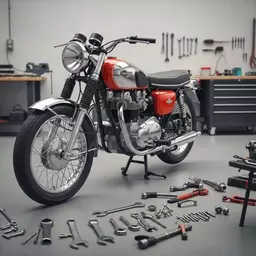
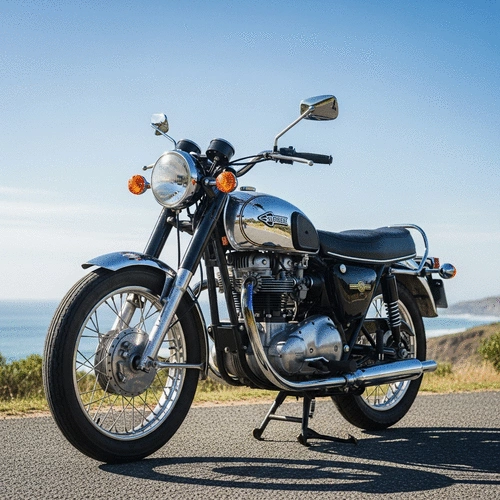
Vintage motorcycle keys should be treated as original components, not disposable access tools. Before changing anything, record what you have, protect the original lock hardware, and choose the least destructive way to restore access.
A missing, worn, or stuck key does not automatically justify replacing the ignition. The better approach is to identify the lock, preserve evidence of originality, confirm ownership records, and document any work that changes how the motorcycle is accessed.
For careful local help with a key or lock issue, collectors can consult All Melbourne Locksmith.
Why Do Vintage Motorcycle Keys Matter to Originality?
Vintage motorcycle keys can carry information about a bike's history that disappears once the original set is discarded. The blade profile, stamped code, manufacturer logo, key-head shape, lock face, and matching fuel-cap or steering-lock key can all help describe how the motorcycle was configured.
That does not mean an old key must remain the only working key. It means the collector should separate preservation from daily use.
A practical goal is to keep the original key and lock components intact while creating a safe way to operate the motorcycle. This may mean cutting a working duplicate, repairing an existing barrel, or fitting a reversible replacement while the original part is stored and labelled.
Classic Motorcycle Exchange's guide to classic motorcycle restoration in Australia already stresses component preservation, authentic parts, and documentation. Key and lock work should follow the same restoration logic.
Photograph the Key Before Any Cutting or Repair Work
Photographing the original key creates a condition record before a locksmith, restorer, or owner changes anything.
Use a plain background and take clear images of:
-
both sides of the key blade
-
the key head
-
any manufacturer logo
-
stamped letters or numbers
-
grooves and shoulder position
-
visible wear
-
bends, cracks, or previous repairs
-
the ignition lock face
-
the steering lock
-
the fuel-cap lock
-
the seat lock, if keyed
-
any matching spare keys
Do not post a clear key-code image publicly. A collector record should preserve the information without exposing it unnecessarily.
Name the files so they stay connected to the motorcycle. A simple format can include the bike make, model, year, registration or collection ID, and the date photographed.
If the motorcycle has several locks, photograph each one and record which key operates it. Older bikes often accumulate replacement tanks, seats, ignitions, or steering locks over decades. One motorcycle may therefore have more than one legitimate key.
Record Every Marking Before It Becomes Unreadable
Old key markings can be shallow. Cleaning, polishing, corrosion, and repeated handling can make them harder to read.
Write down exactly what you can see before attempting restoration. Do not guess missing characters.
Record:
| Item | What to capture |
|---|---|
| Key head | Brand, logo, shape, material |
| Stamped code | Exact letters and numbers |
| Blade | Profile, groove pattern, shoulder |
| Ignition | Brand, code or stamped identifier |
| Fuel cap | Separate code if present |
| Steering lock | Separate code if present |
| Spare key | Whether it matches the original |
| Keyring | Period dealer tag or identification tag |
A dealer tag can be part of the motorcycle's provenance even if it has no mechanical function. Store it separately if daily use risks damaging it.
Do not aggressively polish a plated or stamped key to make it look new. The surface wear may be less important than preserving a faint logo or code.
Keep the Original Key Even After a Working Duplicate Is Made
A replacement key solves access. It does not replace the original as a historical object.
If the original still exists, label and store it after a reliable working duplicate is made. This reduces daily wear and leaves future owners with the part that came with the motorcycle.
Use an archival envelope, small parts box, or labelled document pouch. Keep it with the motorcycle's records rather than loose in a workshop drawer.
The record should state:
-
which key is believed to be original
-
when the duplicate was made
-
who made it
-
whether it was cut from the original key, a code, or the lock
-
which locks the duplicate operates
-
whether any lock was repaired at the same time
If a worn original key has been copied, do not assume the duplicate reproduces the factory dimensions. Record the method used.
That detail matters later if another owner needs to understand why one key works smoothly while another does not.
Do Not Force an Old Ignition or Steering Lock
Resistance is diagnostic information. It is not an instruction to apply more force.
Stop if the key:
-
will not enter fully
-
catches at one point
-
bends under normal hand pressure
-
turns only when lifted or pushed sideways
-
moves in the fuel cap but not the ignition
-
enters the ignition but will not release the steering lock
-
starts to twist
-
feels rough after the motorcycle has been stored for years
Do not use pliers on the key for extra leverage. Do not strike it. Do not drill the lock simply because access is inconvenient.
An old lock may contain worn wafers or pins, corrosion, dried residue, a broken key fragment, a damaged shutter, or parts that have shifted after years of storage. The lock may also be a later replacement that does not match the key you were given.
If the problem appeared during a restoration, check surrounding brackets and hardware before assuming the barrel itself has failed.
A careful inspection preserves options. A broken key or drilled housing can remove them.
Avoid Drilling Until the Lock Has Been Identified
Drilling is destructive. On a rare motorcycle, the lost part may be harder to replace than the key.
Before authorising destructive access, identify:
-
the motorcycle make, model, and approximate year
-
the lock manufacturer where visible
-
any stamped key or lock code
-
whether another key exists
-
whether the fuel cap, seat lock, or steering lock uses the same key
-
whether the ignition is original or a known replacement
-
whether the barrel can be removed without destroying it
-
whether a key can be made from code or from the lock
The answer varies by motorcycle. Some older machines use straightforward mechanical locks. Others may have unusual blanks or previous owner modifications.
The point is not that drilling is never required. It is that drilling should follow identification, not replace it.
If an original barrel must eventually be replaced, keep the removed part unless it creates a safety or legal problem. Label it with the reason for replacement and the date.
Retain Original Lock Parts Even When They Are Not Serviceable
A worn ignition barrel may still matter to the history of the motorcycle.
If a specialist replaces an ignition switch, steering lock, fuel-cap lock, or seat lock, ask for the removed component back. Store it in a labelled bag or box.
Include:
-
the original part
-
old key if available
-
replacement invoice
-
photographs before removal
-
photographs after fitting
-
part number of the replacement
-
notes explaining why replacement was necessary
Do not mix removed parts from different motorcycles in a common box.
A future owner may want to repair the original barrel, compare casting numbers, restore the original key set, or verify what was changed.
This approach also supports the site's broader guidance on understanding classic motorcycle values, where originality, restoration quality, and documented history all affect how collectors assess a bike.
Build a Motorcycle File Before Solving the Key Problem
A key issue is easier to handle when the motorcycle already has a documented identity.
Create one file, physical or digital, for the bike. Include what is available:
-
purchase receipt
-
registration records
-
transfer documents
-
overseas title paperwork, if the bike came with it
-
import or compliance documents
-
VIN, chassis, or manufacturer number
-
engine number
-
old registration papers
-
service records
-
restoration invoices
-
previous-owner correspondence
-
auction listing
-
period photographs
-
old keys and key tags
-
key-code notes
-
lock-repair invoices
For Australian collectors, do not assume every older motorcycle will have a modern 17-character VIN. Older vehicles may use a chassis or manufacturer number instead.
The Personal Property Securities Register notes that motor vehicles can be identified by VIN, chassis number, or manufacturer number. Its April 2025 guidance also confirms that motorcycles can be checked on the PPSR and that available NEVDIS information can include stolen and written-off status. See the PPSR guidance for second-hand motorcycles and vehicles.
The motorcycle file is not proof that every component is original. It is a record of what you know and what changed under your ownership.
Document Provenance as You Go, Not When You Sell
Provenance becomes harder to reconstruct after parts are discarded and memories fade.
Mark Mederski wrote in Motorcycle Classics in October 2025 that collectors can build useful provenance by keeping receipts, old photographs, seller stories, period material, bills of sale, and ownership documents together in a bike file. His documentation guide for classic motorcycles provides a useful model for this type of stewardship.
Apply the same principle to keys.
If a replacement key is made, add the receipt. If a lock is repaired, record the work. If an original barrel is removed, photograph and retain it. If a key code is found in old paperwork, note where it came from.
Do not rewrite uncertain history into certainty.
Use labels such as:
-
"believed original"
-
"supplied with motorcycle at purchase"
-
"replacement fitted by previous owner"
-
"date unknown"
-
"key code recorded from original key"
-
"lock repaired, original barrel retained"
That language protects the record from becoming more confident than the evidence supports.
Check Ownership Before Any Key Is Cut
A responsible key service should establish that the person requesting work has a legitimate connection to the motorcycle.
Collectors should prepare that evidence before arranging a visit. Useful records may include current registration, transfer paperwork, purchase receipt, auction invoice, identification, or other documents linking the owner to the bike.
This matters even more when the motorcycle is an unfinished restoration without current registration.
If the bike was bought as a project, keep the purchase record with the frame or chassis identifier. Do not store ownership evidence only in an email account that may be lost years later.
When buying a classic motorcycle sight unseen, request identity photographs before transport. Classic Motorcycle Exchange's guide to transporting classic motorcycles in Melbourne already recommends condition photographs and close-ups before collection. Add the frame or chassis identifier and supplied keys to that pre-transport record.
Separate a Key Problem From an Ignition-System Problem
On an older motorcycle, "the key does not work" can describe several different faults.
The problem may sit in:
-
the physical key
-
the lock cylinder
-
the electrical switch behind the barrel
-
the steering lock
-
a separate ignition switch
-
old wiring
-
a corroded connector
-
a previous owner's modification
Do not replace the lock until the fault has been narrowed down.
A key that turns normally but does not switch electrical power points to a different investigation than a key that cannot physically rotate.
Likewise, a motorcycle that has no spark after the key turns may have an ignition-system fault unrelated to the mechanical lock.
A locksmith, classic-bike mechanic, and auto electrician solve different parts of that problem. Use the specialist whose work matches the fault.
Decide Whether the Replacement Should Be Visible or Reversible
Collectors often need to balance reliable use with visual originality.
A replacement can be:
-
an exact-period or new-old-stock component
-
a correct reproduction
-
a serviceable period part
-
a modern functional substitute
-
a temporary workshop part
Record which category applies.
If a modern replacement is necessary, choose an installation method that avoids irreversible changes where practical. Do not enlarge original holes, cut brackets, or alter rare trim merely to accommodate a readily available switch if a reversible option exists.
Keep original fixings and brackets when they are removed.
If the replacement changes the key appearance, store the original key with the bike's records rather than disguising the new key as an original item.
The objective is clarity. A future buyer should be able to distinguish surviving original components from later service parts.
Use a Key and Lock Work Record
A one-page work record can prevent ambiguity later.
| Field | Record |
| Motorcycle | Make, model, year |
| Vehicle ID | VIN, chassis, or manufacturer number |
| Engine number | If relevant to the collection file |
| Original key | Present, missing, damaged, uncertain |
| Key markings | Exact code, logo, head shape |
| Locks tested | Ignition, steering, fuel cap, seat |
| Problem | Lost key, stuck barrel, worn key, broken key |
| Work performed | Cut, decoded, repaired, replaced |
| Replacement type | Original, reproduction, service part |
| Original parts retained | Yes or no, with storage location |
| Provider | Business or specialist name |
| Date | Date work completed |
| Evidence | Invoice and photo filenames |
Attach photographs to the record.
If the work is later reversed, add a second entry rather than deleting the first. A restoration history should show the sequence.
What Should a Buyer Check When a Classic Bike Has Replacement Keys?
Replacement keys are not automatically a problem. Undocumented lock changes are the bigger issue.
A buyer should ask:
-
Does one key operate every original lock?
-
Are there separate keys for ignition, fuel cap, steering, or seat?
-
Is the original key retained?
-
Was the ignition barrel replaced?
-
Are removed parts included with the sale?
-
Is there an invoice for key or lock work?
-
Do the key and lock codes match any old records?
-
Was the motorcycle previously sold without keys?
-
Has the steering lock been drilled or removed?
-
Are there signs of forced access around the ignition?
Compare the answers with the overall restoration record. A clean new key does not prove the lock is original. A worn old key does not prove it was supplied with the motorcycle when new.
Preserve First, Then Restore Access
Vintage motorcycle keys sit at the intersection of function and provenance. The bike still needs to open, steer, and start, but solving the access problem should not erase evidence that cannot be recreated.
Photograph markings before work. Keep the original key. Record the bike's VIN or chassis details. Avoid forcing or drilling an unidentified lock. Retain removed parts. Save invoices and photographs with the motorcycle file.
If the key problem is part of a wider restoration, review the site's guide to classic motorcycle restoration in Australia before deciding which original parts should remain, be repaired, or be replaced. That gives the key and lock the same preservation standard as the rest of the motorcycle.