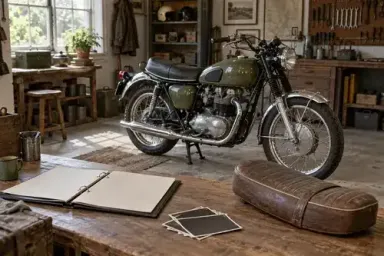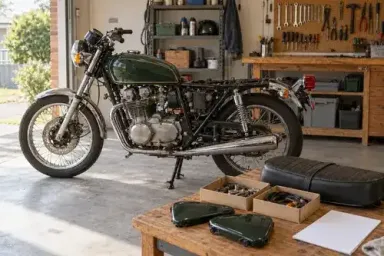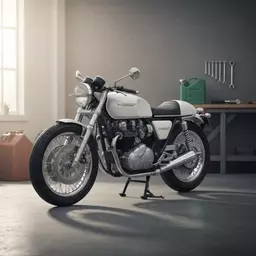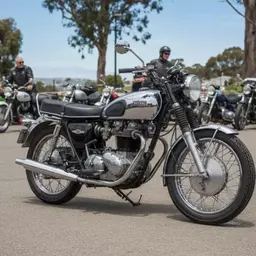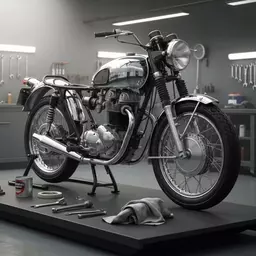
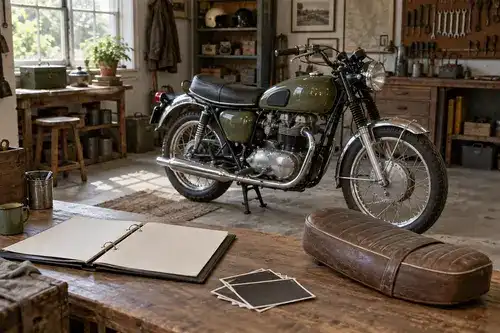
A classic motorcycle's appearance rarely tells the whole story of what has changed. A different seat may be obvious, while an earlier electrical replacement or a change made before your ownership may be harder to explain. When preparing for a sale, collect the evidence behind those changes instead of relying on a broad description such as restored or upgraded.
Create a short change record that connects the present motorcycle with the documents and photographs you actually have. State what is known, identify what remains uncertain and keep earlier information in context. The aim is a clear account of the machine you are offering, without turning a collection of receipts into an unsupported claim of originality or condition.
Describe the actual motorcycle before choosing the route
Whether you plan a private advertisement or enquire about a service through which you can sell your bike, start with the motorcycle's current specification and known history. Explain material changes and the evidence available for them. Confirm any prospective buyer's requirements directly rather than assuming that a particular modification will be accepted or valued in a particular way.
Keep the description consistent across those conversations. If one advertisement calls a component original while your own notes say its origin is unknown, resolve the wording before another person relies on it. An uncertainty stated clearly is more useful than a confident claim based on appearance.
This task does not require deciding whether to restore the bike again. You are preparing an account of its present state. The site's discussion of restoring or preserving a classic bike offers context for those different approaches, but the sale record should reflect what has actually happened to your motorcycle.
Establish a baseline for the record
Begin with the motorcycle's identifying details from the records available to you. Keep relevant documents together and note any discrepancy that needs clarification. Do not try to resolve an identity question by selecting the most convenient description from several conflicting sources.
Take current overall photographs and a consistent set of detail photographs. They should show the machine as offered, including visible changes and known marks. Keep a separate private record of identifying information where appropriate, and avoid publishing unnecessary personal information from documents.
Model research can help you ask better questions, but it does not establish what was fitted to this individual motorcycle. A period brochure, parts illustration or another owner's machine is a reference point. Record the source and its limitations when using it to investigate a component.
If you cannot establish the earlier specification, say that the record begins from the earliest state you can document. A useful history does not need an invented starting point. It can be honest about a gap before your ownership while recording later changes carefully.
Build a change register by area
Organise the record into areas that another person can follow. Bodywork and finish, controls, instruments, lighting, luggage and documented mechanical work may each need their own entry. Use only the categories relevant to the motorcycle rather than padding the file with empty sections.
For each change, record the current item, the earlier item if known, the available evidence and the date or approximate period. Add a photograph reference and a note about anything still uncertain. This gives a buyer a route back to the supporting material.
A practical entry might contain:
- Area or component being described.
- Current fitted item and known product reference.
- Earlier item, if documented.
- Who carried out the change, if established.
- Date or clearly labelled approximate period.
- Receipt, work record or photograph reference.
- Known limits of the information.
Avoid compressing several unrelated changes into a single statement that everything was rebuilt. Each entry should describe a claim you can explain. If the evidence covers a seat purchase and paintwork, it does not establish a full mechanical restoration.
Keep purchases, installation and findings separate
A receipt can identify a purchase without proving that the item is currently fitted. Match it to the motorcycle's present condition where you can, and leave the connection unresolved where you cannot. Do not assume that every receipt in an old folder belongs to the machine being sold.
A workshop invoice may describe work carried out at a particular time. Preserve the wording and date rather than expanding it into a claim about every related system. If the description is unclear, ask the relevant workshop for clarification where practical.
An assessment or test record has its own scope and timing. Keep it separate from the purchase and installation records so another person can see what was checked and when. None of these documents should be presented as a substitute for a current assessment of the whole motorcycle.
If you have no installation record, describe the item and the limit of your knowledge. For example, you may know that a different seat was already fitted when you acquired the bike. That is a useful statement without inventing the installer or date.
Make the photograph timeline readable
Arrange older images in chronological order where the dates are known. Use clear labels for the source and timing, such as previous owner's photograph, date supplied but unverified, or current photograph taken for sale. Avoid presenting an estimated date as a confirmed one.
Connect each important change to a before image, a progress image or an after image where those exist. You do not need dozens of near-identical photographs. A small, well-labelled sequence can explain the change more clearly than an unstructured archive.
The guide to documenting a motorcycle build offers useful context for combining parts information, photographs and a work log. For a retrospective sale file, use that structure only to organise evidence you actually hold. Do not fill missing stages with assumptions about how the work must have been done.
Keep your original files and create copies for annotations or sharing. If you later correct a date or description, retain a note explaining the correction. The file should become clearer as you learn more without concealing its earlier uncertainties.
Treat earlier-owner stories as a source to investigate
An earlier owner may have supplied a valuable account of the motorcycle's history. Keep the account with its source, approximate date and any supporting material. A story and a workshop record can both be useful, but they are different kinds of evidence.
If the account says the engine was rebuilt, ask what documentation supports that description. You may find an invoice with a narrower scope, a set of progress photographs or no further material. State the result accurately rather than choosing the most attractive version of the story.
Mark Mederski's discussion of classic motorcycle documentation highlights the role of receipts, earlier photographs and historical material in retaining a bike's story. Your file can preserve those sources while making clear which claims remain unverified.
When sources conflict, list the conflict and the next sensible question. A photograph may show an earlier component while a later note describes something else. Check the sequence before treating either source as wrong. If the discrepancy remains unresolved, leave it visible in the buyer brief.
Account for retained components and changed keys
If earlier components are included, list the items you have located and photographed. State how you identified them and whether that identification is certain. Do not describe a box as a complete original set unless you can support both completeness and origin.
Record their condition separately from the fitted items. A removed part may have been stored for years, may be damaged or may lack associated pieces. Its presence does not establish that the motorcycle can easily be returned to an earlier specification.
Keys and locks deserve a clear note where they have changed. State what is supplied and what you know about the arrangement. The guide to vintage motorcycle keys provides further context for keeping access questions and originality questions distinct.
Do not dismantle the motorcycle simply to make a sale inventory more impressive. Where identification requires technical investigation, use appropriate expertise and instructions. Your record can state that a component has not been independently identified.
Keep the change history separate from present condition
A well-organised modification file explains the past; it does not certify the motorcycle's current condition. Record current known issues and any relevant professional findings alongside the history. Avoid letting an attractive build photograph obscure a later fault or an incomplete task.
Likewise, a documented change does not automatically establish approval, registration eligibility, roadworthiness or suitability for a particular use. If those matters are relevant to the sale, obtain the appropriate current advice or assessment for the actual motorcycle and location.
Avoid words such as factory, original, period-correct, fully restored or professionally rebuilt unless you can explain the basis and scope. Sometimes a narrower description is both clearer and more useful: a documented replacement, a repaint of unknown date, or an earlier owner's reported change.
This approach also makes buyer questions easier to answer. Instead of defending a broad label, you can direct the person to the relevant entry, photograph and document, then identify what has not been established.
Prepare a concise buyer pack
Put a short current description at the front of the file. Follow it with the change register, selected photographs and an index of supporting documents. Keep the complete archive yourself and share relevant copies without unrelated private information.
Include a clear list of accompanying loose items and any current limitations affecting movement. If collection is being arranged, the article on transporting classic motorcycles in Melbourne can help organise questions for the provider. Confirm the actual arrangements for the motorcycle and separate components directly.
Before sharing the pack, compare it with the advertisement and the bike itself. Remove outdated descriptions and explain any change made since the photographs were taken. Keep a dated copy of the version discussed with a prospective buyer.
A fictional roadster with an honest change history
Imagine an owner selling an assembled classic roadster with a replacement seat, repainted tank and changed instruments. The owner has a seat receipt, dated paint photographs and an earlier owner's note about the instruments, but no installation record for them.
The change register identifies the seat purchase and present fitted item, places the paintwork in its documented sequence and labels the instrument history as reported but not independently confirmed. Current photographs show the machine as offered. A retained earlier seat is listed separately with its known condition.
The description does not promise factory originality, a restoration outcome or extra sale value. It gives the next person a clearer basis for questions and inspection. That is the practical purpose of the file.
Pass on the evidence with its limits intact
A classic motorcycle's changes are easier to understand when the record is specific. Keep photographs, receipts, work descriptions and earlier accounts connected to the claims they actually support.
Preserve the gaps as carefully as the confirmed details. An honest modification record lets the next owner continue the motorcycle's history without first having to untangle an inflated description of its past.