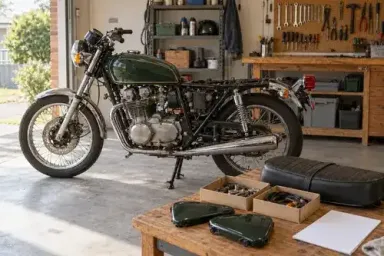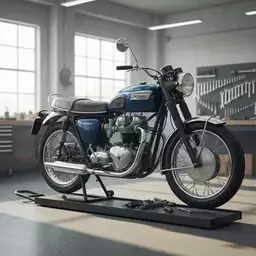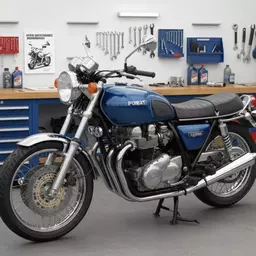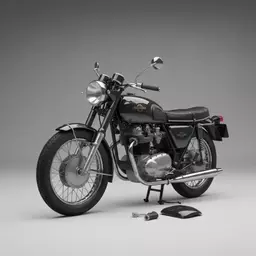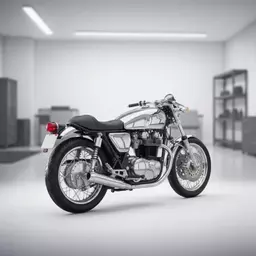
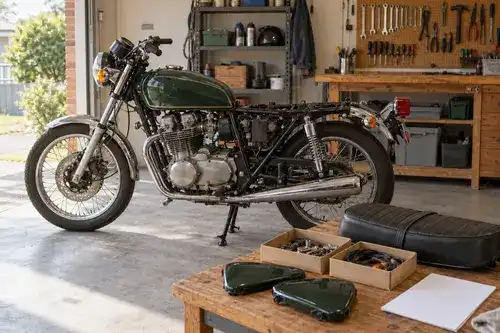
An unfinished classic motorcycle project is easier to discuss when another person can see what is actually there. A clear inventory, current photographs and a short work history give the next conversation a practical starting point. They are more useful than describing the bike as nearly finished when its loose parts, missing items and unfinished tasks have not been reconciled.
You do not have to complete the restoration to organise the project. Start with the motorcycle in its present state, keep uncertain details labelled and record the boundaries of what you intend to include. The aim is to leave another person with an understandable collection, rather than a collection they must interpret from memory and cardboard boxes.
Define what belongs to this project
Before approaching a buyer, decide what is included with the motorcycle. If you are exploring a sell motorbikes route, a present-state inventory can help you describe the project and ask whether it fits the buyer's requirements. Confirm those requirements directly, including how loose components and incomplete machines are assessed.
Walk through the storage area and distinguish this project from anything belonging to another bike. A shelf of spare parts can look like a complete collection even when several items were bought for different models. Do not assume every nearby box belongs in the sale.
Create three short lists: included, excluded and uncertain. Excluded items might be your tools, borrowed equipment or parts reserved for another project. An uncertain item stays uncertain until you can identify it or explain why you believe it belongs with the motorcycle.
Keep those boundaries visible in your notes and photographs. If a valuable-looking spare is pictured in the background but excluded, say so clearly. A tidy inclusion list prevents the photograph from making a promise you did not intend.
Photograph the project as it stands today
Begin with overall views showing the motorcycle and its current level of assembly. Then photograph the loose components in their existing groups. The purpose is to establish what is present, not to make the project appear more complete by arranging unrelated parts around it.
Use ordinary light and enough space to distinguish one item from another. Take a wider photograph of each box or shelf section before closer views. Give the group a simple code that you can repeat in the inventory, such as Box A or Shelf Two.
This guide to documenting a motorcycle build offers useful context for keeping photographs, parts information and work notes together. For a project that is already unfinished, record the state you can see now and explain where earlier documentation is missing.
Do not dismantle assemblies simply to improve the photographs. Some items may need a specialist to identify or assess them. Record accessible details and leave the work itself to a suitable person.
If you photograph identification markings, retain a clear private copy for appropriate review. Avoid presenting a marking as proof of originality or compatibility unless you have supporting evidence. A number you can read is an observation; interpreting what it establishes is a separate task.
Build an inventory another person can use
An inventory can be a spreadsheet, a printed list or a document with photographs. Choose a format you can maintain. The layout matters less than the connection between each entry and the physical item.
Useful fields include:
- A unique item or group reference.
- The storage location or box code.
- A plain description of what you can observe.
- Quantity, where it can be counted reliably.
- Whether it is fitted, loose or partly assembled.
- Visible markings or a known part number.
- The basis for identifying it.
- Any relevant receipt, photograph or work document.
- Known damage, missing pieces or uncertainty.
A description such as two loose side covers, believed to be from this project, is more informative than complete bodywork when you have not checked the rest of the panels. If you have a supplier receipt, reference it without assuming that purchase proves the part fits or has been installed.
Group small items only when that helps the record. A bag of mixed fasteners can be listed as a mixed bag with an unverified application. It should not become a complete engine fastener set through optimistic wording.
Where you have several similar components, photograph and label them separately. Avoid combining a fitted item and a spare into a single entry. Another person should be able to locate each item without asking you to remember which one you meant.
Keep completed work separate from purchased parts
Restoration records often contain several kinds of evidence. There may be invoices for professional work, receipts for parts, owner notes and photographs of intermediate stages. Each tells a different part of the story.
An invoice may describe work completed on a particular component. A parts receipt records a purchase. A photograph shows a condition or stage at a point in time. None should be silently substituted for another.
Prepare a short chronology with three headings: documented work, owner-reported work and proposed work. Include dates where supported. If you are reconstructing the history from older paperwork, say that the chronology was prepared later from those records.
The discussion of labelling owner work and gaps in a motorcycle history is useful when deciding how to describe incomplete evidence. Keep the wording specific to the records you hold, rather than implying a continuous history that cannot be shown.
For example, a receipt for an engine component should stay in the purchases section unless you can document its installation. If a previous owner said an assembly had been rebuilt but supplied no invoice, record that as a previous owner's statement. It is not the same as a verified rebuild record.
You can still pass useful information on without overstating it. A note explaining the origin of a claim lets the next person decide what further assessment is needed.
Preserve evidence before improving presentation
An unfinished classic may contain details that matter to someone researching its history. Existing finishes, old photographs, labels and earlier receipts can be relevant even when you have not established their significance.
Gather the evidence before making cosmetic changes for sale. You do not need to decide whether every item is original. You can show what was present when you acquired the project, what changed during your ownership and what remains uncertain.
The site's discussion of restoring or preserving a classic motorcycle provides context for thinking about the project's direction. A sale inventory should record the direction already taken without claiming that a particular choice guarantees value.
Keep removed components distinguishable from replacement purchases where possible. Note why something was removed if you have a documented reason. If the reason is unknown, leave it unknown rather than inventing a fault or assuming it was an upgrade.
Keys and locks deserve their own entry. Record what is present, which key is associated with which lock where known, and what has actually been checked. The site's guide to vintage motorcycle keys can help frame questions about preserving existing items and documenting changes. Do not force an uncertain key into a lock to complete an inventory field.
Describe gaps without a completion percentage
The phrase ninety per cent complete sounds precise but leaves important questions unanswered. Does it refer to the number of parts present, the labour already done or an owner's impression? A small missing assembly can also represent a substantial unresolved task.
Replace a percentage with a present-state description. State which major assemblies are fitted, which are loose and which known items are absent. Add a separate list of tasks you intended to do, clearly labelled as your plan rather than a professional assessment.
Avoid promising that the motorcycle only needs reassembly. That wording reaches beyond an inventory unless the necessary assessments and checks have been completed and documented. A collection of parts may still require identification, inspection, additional sourcing or professional work.
You can use a simple status vocabulary throughout the file:
- Present and identified from supporting evidence.
- Present, identification uncertain.
- Reported work with supporting documentation.
- Reported work without supporting documentation.
- Known missing item.
- Not assessed.
These labels are deliberately plain. They help separate what you can demonstrate from what another person needs to investigate.
Plan the physical handover alongside the paperwork
A project sale includes the practical problem of moving both the motorcycle and its loose components. Discuss that state before collection arrangements are finalised. A carrier needs an accurate description of the machine, access and items to be moved.
The site's guide to transporting a classic motorcycle in Melbourne provides a starting point for collection questions. Let the actual provider determine the equipment, loading method and packaging requirements for the project.
Tell the provider if the motorcycle is partly assembled or has known restrictions affecting movement. Explain how many boxes or loose assemblies are included, and ask what must be prepared before arrival. Do not assume that a service arranged for one assembled bike automatically includes a workshop's worth of spares.
Use the inventory as a collection checklist. Reconcile the box codes and included items with the buyer before they leave. If anything changes between the first enquiry and handover, update the file and make that change explicit.
Keep a copy of the final inventory and relevant records. Prepare buyer copies without unrelated personal information, while retaining the information needed to understand the project. Documentation should make the transfer clearer for both people.
A clearer description of a fictional project
Consider a fictional owner preparing to sell a partly dismantled classic. Their first draft says the bike is nearly complete, with rebuilt parts and boxes of spares. That description combines several claims without explaining any of them.
After making an inventory, the owner can say that the frame and wheels are together, several assemblies are stored separately, and the included boxes are listed by reference. One invoice records professional work on a named component. Other work is described as an earlier owner's account without supporting paperwork.
The revised description also lists known missing items and states that the remaining loose components have not been fully identified. Tools visible in the garage photographs are excluded. The buyer can now ask focused questions and decide what further inspection is needed.
The project has not become more complete through this exercise. Its description has become more accurate. That is the useful outcome of the inventory.
Leave a project someone else can understand
An unfinished motorcycle does not need a polished restoration story. It needs a record that connects the machine, the loose parts and the evidence you actually hold. Keep that record factual, and let uncertainty remain visible.
A clear box map, an honest work history and an agreed inclusion list give the next owner a better starting point. They also let you close your part of the project without promising work, originality or completeness that has not been established.